
In the global food business, fresh fruit is rapidly changing its category. International buyers are no longer just looking to secure a volume of product; they demand traceability, rigorous sanitary standards, verifiable sustainability, and a logistics capacity that guarantees constant quality deliveries.
Given this new landscape, Colombia seeks to make a strategic leap: moving from being a traditional agricultural supplier to consolidating itself as an agro-industrial platform with a strong export vocation. In this article, we will analyze the current state of agro-industrial investment in the country, key export figures, and the logistics challenges every business owner or investor must master to compete successfully in international markets.
The New Global Standard for Fresh Fruit
Global consumption is shifting, driven by a growing demand associated with health, wellness, and more natural diets. In fact, global fresh fruit production is approaching 900-950 million tons annually, according to FAO data.
However, the dynamism of international trade is concentrated in high-value markets such as the United States, the European Union, and China, where quality and compliance requirements are becoming increasingly strict. For exporters, this redefines the business model: it is no longer enough to produce more; it is necessary to guarantee consistency, comply with complex regulatory frameworks, and offer differentiating attributes such as origin and sustainable certifications.
Why is Colombia Attracting Agro-Industrial Investment?
The country presents clear structural advantages that position it as a highly competitive player for investors and exporters looking to supply the world.
-
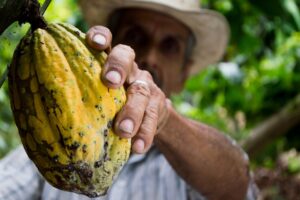 Year-Round Production: Its equatorial location, the absence of marked seasons, and the diversity of thermal floors allow Colombia to harvest fruits throughout the entire year.
 -
National Coverage: Fruit production is present across all 32 departments of the country.
-
Diversified Portfolio: The exportable basket goes far beyond traditional products and includes high-value items like Hass avocado, citrus, mango, blueberries, and passion fruits, in addition to banana and plantain.
-
Expansion Potential: Colombia has nearly 42.9 million hectares identified as an agricultural frontier by the UPRA. Only a portion of this land is currently in productive use, which opens up ample space for new projects that integrate production efficiency and technology.
The numbers back up the country’s appeal as a supply hub. According to DANE-DIAN data, fruit exports exceeded USD 2.1 billion in 2025.
-
Main Markets: The United States and Europe remain the primary destinations for Colombian fruit. In these regions, the demand for fresh, sustainable, and traceable products continues to grow.
-
Active Foreign Investment: International companies originating from countries such as Spain, Israel, Chile, Peru, and the United States have already taken strategic positions in Colombia. Their main goal is to produce, transform, and export, with a strong focus on Hass avocados and other tropical fruits.
Customs and Logistics Challenges: The Key to Competitiveness
Having the fruit is not enough. The real operational challenge for exporting companies is to capture more value within the chain. Future competitiveness will depend on advancing in critical links such as processing, packaging, cold chain logistics, and certifications.
Furthermore, barriers to entry are rising. In markets like Europe, regulations on traceability, efficient use of natural resources, and environmental sustainability are much more demanding. Exporting successfully requires perfect alignment between field operations and flawless international logistics that ensure the cold chain is never broken and customs processes flow without delays that could compromise the product’s shelf life.
Colombia is experiencing an opportune moment. In an international environment where food security, health, and sustainability are redefining consumption decisions, the country has the margin to consolidate itself as a reliable supplier and a strategic destination for investment. The goal for the sector is clear: to stop competing solely on volume and start competing on value, leveraging technology and highly efficient logistics.
In the export of perishables, a mistake in customs or in the cold chain can mean the total loss of a container. At Siacomex, we support you as your expert 4PL logistics partner and customs brokerage agency. Contact us today to evaluate your fresh fruit export processes and safeguard your international operations.
Which fruits does Colombia export the most currently? Exports are primarily driven by bananas, Hass avocados, plantains, and various exotic fruits like citrus, blueberries, passion fruits, and mangoes.
What are the main countries buying Colombian fruit? Historically and according to the latest data, the United States and Europe continue to be the most important destination markets for Colombian fruit exports.
What are foreign investors looking for in Colombian agriculture? They are looking for conditions to develop scalable agro-industrial projects, taking advantage of access to international markets, the availability of suitable land, and the ability to integrate technology into the entire value chain. There is already a presence of capital from the United States, Chile, Spain, Israel, and Peru.